How to Set Up a Proxy in GoLogin
Attach an external proxy to a GoLogin profile from its Location column or the Your proxy settings. Supply the issued endpoint, connect it, and verify the result inside the launched profile.
Documentation reviewed 31 October 2026 · Proxyca setup guide
Get your Proxyca connection details
Residential proxies
Buy a GB package. Open My proxies → Generate, choose quantity, country, city, protocol and rotation or sticky settings, then generate your connections.
Datacenter proxies
Open Static proxies, choose country, IP quantity and rental period, then pay. Open the issued order in My proxies.
Copy the host, port, username and password for one connection. The hostname:port:username:password format puts those four fields in that order. In a browser with separate fields, paste each value into its matching field and select the issued protocol.
Have the issued endpoint ready
Open the connection details supplied with your proxy order. Keep the host, port, protocol and any username and password together. Use the values for the same endpoint; do not combine a port from an example with credentials from an order.
A hostname is entered as issued. A port is a connection setting, not an IP address. When authentication is required, the proxy username and password are separate from your GoLogin account login. Keep them out of screenshots you send to a public forum.
Attach your own endpoint from All profiles
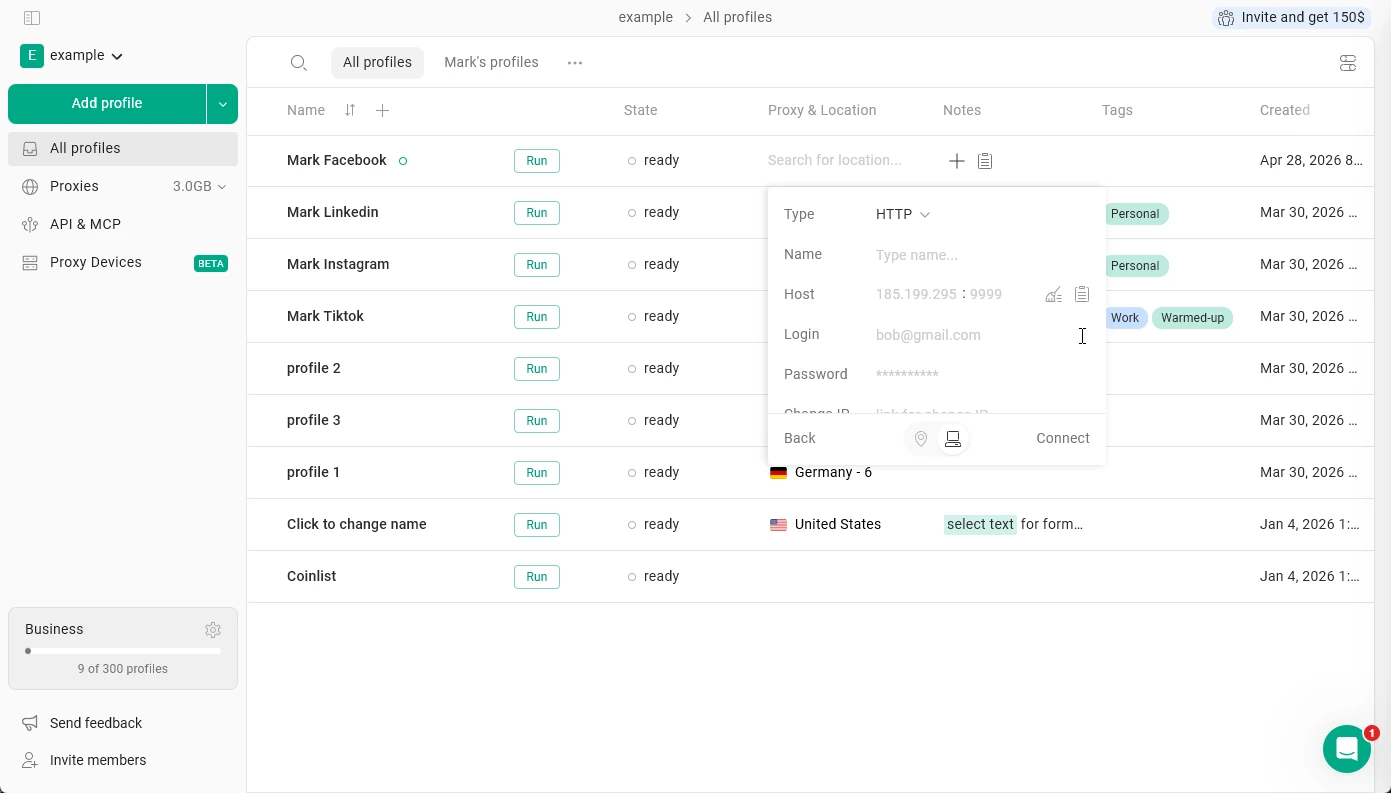
- On All profiles, find the Location column for the profile you want to configure and click its + control.
- Choose the computer icon for an external endpoint. Enter the host or IP, port, username and password supplied with your order.
- Review the selected protocol against your endpoint details. GoLogin can select a protocol automatically; confirm the selection rather than relying on the pasted port number alone.
- Click Connect. GoLogin checks the connection and displays a green or red indicator. Launch this same profile and make a browser request to confirm the result you need.
Menu labels can vary by version. These instructions follow the GoLogin: adding and managing external proxies.
Distinguish external traffic from GoLogin’s allowance
You can also open the profile’s three-dot menu → Settings → Proxy → Your proxy. For imports, the documented route is Proxies → Import proxies → Paste proxies. Start with one endpoint before importing a list, so a formatting mistake does not spread across many profiles.
GoLogin distinguishes its built-in proxy traffic from traffic through an external provider. Your own endpoint uses the external provider’s allowance, not the included GoLogin proxy allowance. Check the product you actually attached when investigating an empty traffic balance.
What the proxy controls look like
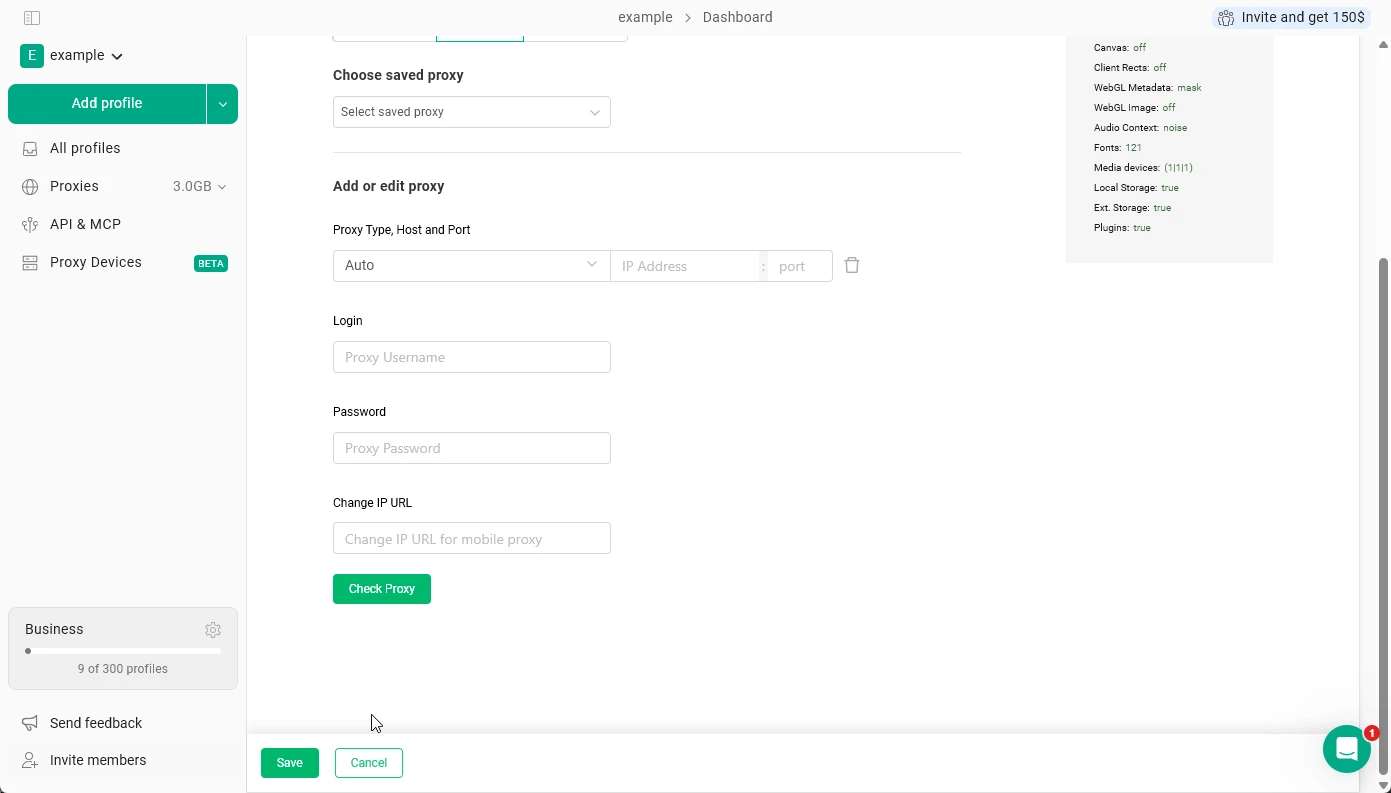
The images show the developer’s documented interface. Example credentials or profile names in them are not a Proxyca endpoint; enter the details issued with your own order.
Verify the selected profile and its traffic source
The green or red indicator is the outcome of GoLogin’s checker. For your own test record, launch the profile and open a public-IP lookup from inside it. Record that address, the profile name and time. Repeat in the same window if you change the endpoint.
If the result is unexpected, return to Your proxy and compare the saved values with the issued endpoint. A correct-looking label is not a substitute for inspecting the underlying host and port. Confirm that you launched the profile you edited, especially when several profiles have similar names.
If a lookup works but your destination does not, retain both results. If the checker fails, check credentials, active term or available traffic before importing another list. GoLogin’s proxy FAQ lists exhausted traffic and expired proxies among possible causes, not a diagnosis for every red indicator.
The public IP tool checks the request from the browser window where you open it. It does not test an endpoint configured only in another application.
If the first attempt fails
Change one setting at a time and repeat the same request. Start with typing or paste errors, the selected protocol, and the active order. When an import string parses unexpectedly, inspect its fields rather than repeatedly pasting the whole value.
For an HTTP proxy response of 407, investigate proxy authentication. A different destination error needs its own diagnosis; a failing page alone does not identify which component rejected the request. See the connection testing guide for a fuller sequence.
To troubleshoot the connection, record the order number, application version, endpoint host and port, selected protocol, test time and exact error. Redact passwords and tokens. State whether the failure happens in the checker, the launched profile or only one destination.
GoLogin proxy questions
Can I paste an endpoint instead of filling every field?
GoLogin documents several paste formats, including host:port:login:password. Inspect the parsed values before applying them, especially if a credential contains separator characters.
Does an external endpoint use my GoLogin proxy allowance?
GoLogin says external proxies use traffic from their own provider. Review the external order’s allowance and the endpoint attached to this profile.
Should I install a proxy extension inside Orbita?
GoLogin recommends its profile proxy settings instead of relying on a proxy extension inside Orbita. Use those settings for this setup and keep the test tied to the launched profile.
Choose a product for your connection requirements
Compare the available plans by billing unit, required location and application compatibility. A successful proxy connection is not a guarantee that a website will accept an account or request. Use the service within the destination’s rules and your authorization.
All application setup guides include the existing AdsPower walkthrough. For current interface details, also see GoLogin proxy FAQ.
Choose a proxy for your browser profiles
Use residential traffic for country and city settings, rotation or sticky sessions. Start with 1 GB for $8, then generate connections in Telegram. Choose datacenter rental when your profile needs a static rented IP: from $2.50 per IP for 30 days.
Residential packages → · Static IP plans → · Test your connection →